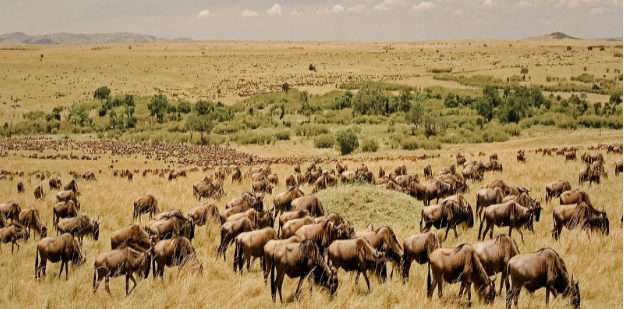
Discover the land where nature still commands absolute authority — sweeping savannas, ancient craters, and wildlife encounters that change you forever.
Introduction
There are destinations that entertain, and then there are destinations that transform. Tanzania belongs firmly in the second category. Stretching across East Africa with an ecological richness that humbles every visitor, Tanzania is a country where the wild world has not been subdued, tamed, or edited for human comfort. It remains raw, vast, and magnificent — and a Tanzania safari places you directly inside it.
Home to the legendary Serengeti plains, the otherworldly Ngorongoro Crater, the remote southern wilderness of Selous, and the elephant kingdoms of Tarangire, Tanzania offers wildlife experiences that simply cannot be replicated anywhere else on Earth. The country has set aside more than 38 percent of its total land area for conservation — a staggering commitment that translates directly into richer ecosystems, healthier animal populations, and more authentic safari encounters for every visitor.
Whether you are watching a cheetah sprint across golden grass at 70 miles per hour, tracking chimpanzees through misty mountain forest, or sitting in silence as a thousand wildebeest thunder toward a river crossing, Tanzania delivers moments of such profound intensity that they quietly and permanently reshape your relationship with the natural world. This guide covers everything you need to know to plan the Tanzania safari of a lifetime.
The Iconic Parks and Reserves of Tanzania
Tanzania’s protected areas form one of the most extraordinary conservation networks ever assembled. Each park carries its own distinct personality, landscape, and cast of wildlife characters — ensuring that no two Tanzania safaris are ever quite the same.
Serengeti National Park — The Infinite Plain
The Serengeti is the heartbeat of East African wildlife and the stage for the planet’s most celebrated natural drama. Covering nearly 15,000 square kilometres of open grassland, acacia woodland, and riverine forest, it supports Africa’s densest concentration of large predators — lion, cheetah, leopard, hyena, and African wild dog — alongside vast herbivore herds that stretch to every horizon.
But nothing defines the Serengeti more completely than the Great Migration: the year-round circular journey of over 1.5 million wildebeest, 400,000 zebra, and countless gazelle following fresh rainfall and new grass across the ecosystem. The Mara River crossings between July and October — where thousands of animals plunge simultaneously into crocodile-infested waters — represent one of the most overwhelming spectacles in all of nature.
Ngorongoro Conservation Area — The Eighth Wonder
Formed by the dramatic collapse of an ancient volcano, the Ngorongoro Crater descends 600 metres from its rim to a floor that functions as a self-contained ecological theatre. Nearly 25,000 large animals reside permanently within this 260-square-kilometre bowl, including one of Africa’s most stable populations of black rhinoceros. A single game drive here routinely delivers Big Five sightings that would be the highlight of an entire safari in any other destination.
The conservation area also encompasses the Olduvai Gorge — one of the most significant paleoanthropological sites in the world, where fossil remains of some of humanity’s earliest ancestors were discovered.
Tarangire National Park — The Elephant Kingdom
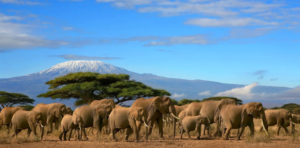
Tarangire is Tanzania’s best-kept secret. During the dry season, the Tarangire River draws extraordinary concentrations of elephants — sometimes numbering in the hundreds — that gather along its banks in scenes of thunderous, dust-filled majesty. Ancient baobab trees, some estimated to be over a thousand years old, dominate the horizon with their surreal, gravity-defying silhouettes.
Tarangire is equally celebrated as one of East Africa’s premier birdwatching destinations, with over 550 recorded species including rare endemics found nowhere else in Tanzania.
Selous Game Reserve (Nyerere National Park) — The Southern Wilderness
The vast and largely unvisited wilderness of Selous — now officially designated Nyerere National Park — is Africa’s largest game reserve and one of its most pristine. Here, the safari experience strips back to its essential core. Boat safaris on the Rufiji River bring you within metres of enormous hippo pods and ancient Nile crocodiles. Walking safaris led by experienced armed rangers reveal a dimension of the bush that no vehicle can ever replicate — every broken twig and distant rumble becomes significant.
Ruaha National Park — The Last Frontier
Remote, rugged, and unapologetically wild, Ruaha is Tanzania at its most untamed. Tanzania’s largest national park supports exceptional predator populations — lion, leopard, cheetah, and the increasingly rare African wild dog — alongside the country’s greatest concentration of greater kudu and roan antelope. Because Ruaha attracts far fewer visitors than the northern circuit parks, game drives carry a genuine sense of exploration and solitude that is becoming increasingly rare in Africa.
The Great Migration: Nature’s Greatest Show
No single event in the natural world matches the scale and emotional force of the Great Migration. Every year, driven by instinct and guided by rainfall patterns refined over millennia, more than two million animals complete a roughly 1,800-kilometre circular journey across the Serengeti-Mara ecosystem. The migration never truly stops — it is a continuous, perpetual movement governed entirely by the location of fresh grazing.
The journey moves through distinct, seasonally defined chapters:
- January – March: The southern Serengeti becomes a vast calving ground. Up to 8,000 wildebeest calves are born daily, drawing predators in extraordinary numbers. This is one of the finest periods for wildlife photography.
- April – June: The herds push northward and westward through the central Serengeti, with dramatic river crossings at the Grumeti River.
- July – October: The northern Serengeti and the Kenyan Mara River become the stage for the iconic crossings — the migration’s most heart-stopping chapter, as vast columns of wildebeest plunge into crocodile-infested waters in scenes of raw, primal urgency.
- November – December: The herds begin their southward return, completing the cycle.
Pro Tip: Book your migration river-crossing camp a minimum of 9 to 12 months in advance. The best positioned camps along the Mara River sell out extremely quickly, particularly for July and August.
Choosing Your Tanzania Safari Style
One of Tanzania’s greatest strengths as a destination is the sheer diversity of safari formats available. Understanding the differences allows you to build an itinerary that perfectly matches your personality, physical comfort level, and wildlife priorities.
| Safari Style | Best For | Top Locations |
| Classic Game Drive | First-timers, Big Five | Serengeti, Ngorongoro |
| Walking Safari | Immersion, detail | Selous, Ruaha |
| Hot Air Balloon | Photography, romance | Serengeti |
| Boat Safari | Hippo, crocodile, birds | Selous (Rufiji River) |
| Fly-In Safari | Short trips, remote areas | Ruaha, Mahale |
| Luxury Tented Camp | Comfort + wilderness | All major parks |
| Chimpanzee Trekking | Primate encounters | Mahale, Gombe |
Each of these formats offers a genuinely different perspective on Tanzania’s wildlife. Many travellers combine two or three styles within a single itinerary — for example, classic game drives in the Serengeti followed by a walking safari in Selous and a few nights in a luxury tented camp on the Rufiji River.
When to Go: Tanzania Safari Seasons
Tanzania can be visited and enjoyed year-round, though each season offers distinct advantages depending on what you want to experience.
June – October (Dry Season) This is peak game-viewing season across all parks. Thinning vegetation concentrates animals around water sources, predator-prey dynamics intensify, and the Mara River crossings reach their dramatic peak. Expect higher lodge rates and more visitors, particularly in the Serengeti.
January – March (Green Season / Calving) The landscape is lush and deeply photogenic after the short rains. The southern Serengeti witnesses extraordinary calving activity, with predator concentrations to match. Birdwatching peaks as European and Asian migratory species arrive. Rates are generally lower than peak season.
November – December (Short Rains) Brief afternoon showers refresh the landscape without significantly disrupting game drives. Visitor volumes are lower, rates are attractive, and the bush is beautifully green. An excellent value season for experienced safari travellers.
April – May (Long Rains) Heavy rainfall can make some remote roads temporarily inaccessible. However, the landscape reaches its most spectacular verdant peak, rates are at their annual lowest, and many exclusive camps offer substantial discounts. A rewarding season for photographers seeking dramatic skies and intimate wildlife encounters without crowds.
Essential Planning Tips for Your Tanzania Safari
A Tanzania safari rewards careful preparation. These key planning principles will help ensure your experience exceeds expectations.
- Book well in advance. The finest lodges and camps — particularly in the Serengeti during migration season — routinely sell out 9 to 12 months ahead. Do not leave booking until the last minute.
- Choose a specialist operator. Tanzania is best experienced with a TATO (Tanzania Association of Tour Operators) registered company whose guides carry deep, park-specific knowledge and genuine passion for wildlife. Research thoroughly and ask to speak directly with your assigned guide before confirming.
- Pack smart. Neutral-coloured clothing in khaki, beige, olive, and stone tones is essential — avoid bright colours that can disturb wildlife. Quality binoculars (10×42 are ideal), a telephoto camera lens (300mm minimum), SPF 50+ sunscreen, and DEET insect repellent are non-negotiable.
- Prioritise health preparation. Consult a travel health clinic 6 to 8 weeks before departure for personalised malaria prophylaxis advice and vaccination guidance. Yellow fever vaccination is required from endemic countries.
- Add a Zanzibar extension. The spice island of Zanzibar pairs perfectly with any Tanzania safari — 3 to 5 days of white-sand beaches, UNESCO-listed Stone Town, and world-class snorkelling or diving provides a spectacular counterpoint to the bush.
- Understand tipping culture. Tipping guides and camp staff is customary and greatly appreciated. A widely accepted standard is $15–$25 per guest per day for your guide, and $10–$15 per guest per day collectively for camp staff.
Conclusion
A Tanzania safari is one of the most complete, emotionally resonant, and genuinely life-changing travel experiences available anywhere on this planet. It is a destination that delivers on every level simultaneously — the sheer visual spectacle of the Great Migration, the intimate drama of a predator hunt unfolding metres from your vehicle, the silence of an African bush dawn broken only by distant lion roars and birdsong, and the warmth of Tanzanian people who take genuine pride in sharing their extraordinary natural inheritance with the world.
Tanzania has made the bold and courageous choice to protect its wilderness with remarkable dedication, and every traveller who visits responsibly becomes part of that ongoing conservation story. Tourism dollars invested thoughtfully in Tanzania fund anti-poaching operations, support local communities, and sustain the infrastructure that keeps these wild places wild.
You will leave Tanzania with photographs, yes. But more than that, you will leave with a perspective shift that is difficult to articulate and impossible to reverse. The wild world is not separate from us. In Tanzania, for a brief and precious time, you are inside it — and it changes you in the very best way.
Plan carefully. Travel responsibly. Let Tanzania do the rest.
Key Takeaways
- Tanzania protects over 38% of its land area — giving it one of the highest concentrations of accessible, undisturbed wildlife on Earth.
- The five core safari destinations — Serengeti, Ngorongoro, Tarangire, Selous/Nyerere, and Ruaha — each deliver a distinctly different landscape, atmosphere, and wildlife experience.
- The Great Migration involves over 2 million animals in perpetual year-round motion; Mara River crossings between July and October represent its most dramatic chapter.
- Safari styles range widely — from classic open-vehicle game drives and walking safaris to hot air balloon flights, boat safaris, and ultra-luxury tented camps.
- The dry season (June–October) is peak game-viewing time; calving season (January–March) offers extraordinary predator action and photographic conditions.
- Book 9 to 12 months ahead, use a TATO-registered specialist operator, and consider pairing your safari with a Zanzibar beach extension for the complete Tanzania experience.
- Tanzania is one of Africa’s safest and most politically stable safari nations, with well-established tourism infrastructure across the northern circuit.
Frequently Asked Questions (FAQ)
Q: How much does a Tanzania safari cost?
A: Costs vary significantly by style and season. Budget camping safaris begin at approximately $150–$250 per person per day; mid-range lodge safaris typically run $350–$700; and premium luxury tented camps range from $800 to over $2,500 per person per day, generally including all meals, game drives, and park fees. International flights are additional and should be budgeted separately.
Q: How many days do I need for a Tanzania safari?
A: A minimum of 6 to 7 days is recommended to comfortably cover the northern highlights — Serengeti and Ngorongoro. For a more comprehensive itinerary that includes Tarangire, Selous, or Ruaha, allow 10 to 14 days. Adding a 3 to 5 day Zanzibar beach extension is extremely popular and logistically straightforward.
Q: What wildlife can I expect to see?
A: Tanzania offers outstanding Big Five sightings — lion, leopard, elephant, buffalo, and black rhino — alongside cheetah, giraffe, hippo, crocodile, African wild dog, hyena, zebra, and over 1,000 bird species. In the Ngorongoro Crater specifically, sightings of all five Big Five species within a single game drive are genuinely realistic.
Q: Is Tanzania safe for tourists?
A: Tanzania is widely regarded as one of Africa’s most stable and traveller-friendly destinations. It has maintained consistent political stability since independence and has strong international relationships. Standard urban travel precautions apply in cities like Dar es Salaam and Arusha. Reputable safari operators maintain comprehensive safety standards across all field operations.
Q: Do I need a visa to visit Tanzania?
A: Most nationalities require a visa to enter Tanzania. An e-visa is available through the official Tanzania Immigration portal and is faster and more convenient than applying on arrival. Processing typically takes 5 to 10 business days — apply at least three weeks before your departure date.
Q: What vaccinations are recommended?
A: Yellow fever vaccination is required if you are arriving from or transiting through a yellow fever-endemic country. Hepatitis A, typhoid, and tetanus vaccinations are strongly recommended. Malaria prophylaxis is essential for all visitors to Tanzania. Consult a travel health clinic 6 to 8 weeks before departure for personalised medical advice.
Q: What is the best Tanzania safari for first-time visitors?
A: A classic 8-day northern circuit safari combining Tarangire National Park, the Ngorongoro Conservation Area, and the central or northern Serengeti is the ideal introduction. This itinerary delivers maximum wildlife diversity, well-maintained roads, consistent sightings across all seasons, and a wide range of accommodation options at every budget level.
Q: Can children go on a Tanzania safari?
A: Absolutely. Tanzania is an excellent family safari destination. Many luxury camps offer dedicated family suites, junior ranger programmes, and age-appropriate wildlife activities. Standard game drives are suitable for children aged 6 and above. Walking safaris typically carry a minimum age requirement of 12 to 16, depending on the park and individual operator policy.
Q: What should I pack for a Tanzania safari?
A: Pack lightweight, neutral-coloured clothing in khaki, beige, olive, or stone tones. Essential items include a wide-brimmed sun hat, quality sunglasses, SPF 50+ sunscreen, DEET-based insect repellent, binoculars (10×42 recommended), a camera with a telephoto zoom lens, a headlamp, and a warm layer for cool highland mornings and evenings. Use a soft-sided duffel bag rather than a hard suitcase for easier handling on light aircraft transfers between parks.
Africa is calling. Tanzania is waiting. Your greatest adventure begins with a single decision.