Introduction
Few places on Earth stir the imagination quite like Tanzania. Nestled along East Africa’s Indian Ocean coastline, this vast nation is home to some of the most breathtaking wildlife spectacles our planet has to offer. From the endless golden plains of the Serengeti to the snow-capped summit of Mount Kilimanjaro looming on the horizon, Tanzania is a land of superlatives — the largest, the most abundant, the most diverse.
A Tanzania wildlife safari is not merely a vacation; it is a pilgrimage to the birthplace of life itself. Fossil evidence found in Tanzania’s Olduvai Gorge suggests that our earliest human ancestors walked these very lands more than 1.8 million years ago. Today, the same landscapes that cradled humanity continue to support an astonishing density of wildlife — from the iconic African elephant to the elusive leopard, from million-strong wildebeest migrations to the smallest jewel-winged sunbird.
Whether you are a seasoned safari traveler or a first-time visitor, Tanzania offers an experience that is at once humbling, exhilarating, and profoundly life-changing. This guide walks you through everything you need to know to plan the safari of a lifetime.
The Big Five and Beyond
Tanzania is one of the few remaining strongholds of Africa’s legendary Big Five — lion, leopard, elephant, Cape buffalo, and rhinoceros. The term, originally coined by big-game hunters to describe the five most dangerous animals to hunt on foot, has evolved into a beloved symbol of African wildlife conservation.
Lions of the Serengeti
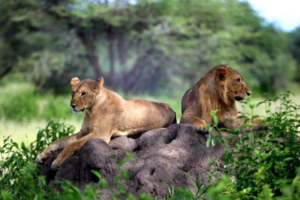
Tanzania’s lion population is among the healthiest in Africa, with the Serengeti alone supporting an estimated 3,000 individuals. These magnificent cats can be seen year-round, often lounging on rocky outcrops called kopjes or moving in prides across the grasslands at dawn. The Ngorongoro Crater is particularly famous for its dense lion population, offering some of the most intimate encounters possible.
Elephants of Tarangire
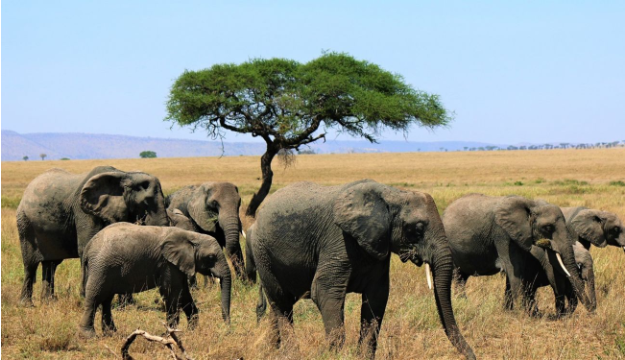
While elephants roam across many of Tanzania’s parks, Tarangire National Park stands out as a sanctuary. During the dry season (June to October), up to 300 elephants at a time gather around the Tarangire River — one of the greatest elephant concentrations on the continent. Watching multi-generational herds engage in complex social behaviors is an encounter that stays with visitors for the rest of their lives.
The Leopard’s Secret World
Tanzania wildlife safari leopards are notoriously elusive, preferring dense riverine woodland and nocturnal hunting. The Ruaha National Park and Mahale Mountains are particularly productive leopard destinations, though a patient game drive in almost any Tanzanian reserve may reward you with a sighting of this solitary, spotted ghost draped lazily over an acacia branch.
Beyond the Big Five
Tanzania’s wildlife extends far beyond the Big Five. The country harbors over 1,000 bird species, making it a paradise for ornithologists. The flamingo-dotted shores of Lake Manyara, the painted wolves (African wild dogs) of Ruaha, the chimpanzees of Gombe and Mahale, and the graceful giraffes silhouetted against fiery sunsets — Tanzania’s biodiversity is simply staggering.
Tanzania’s Premier Safari Destinations
1. Serengeti National Park
Covering approximately 14,763 square kilometers, the Serengeti is Tanzania’s most iconic safari destination and a UNESCO World Heritage Site. Its name derives from the Maasai word Siringet, meaning “the place where the land runs on forever” — an apt description of its boundless horizon.
The Serengeti is best known as the stage for the Great Wildebeest Migration, often described as the greatest wildlife show on Earth. Each year, approximately 1.5 million wildebeest, 400,000 zebra, and 200,000 gazelle undertake a circular journey of over 1,800 kilometers in search of fresh grazing. The drama peaks at the Mara River crossings between July and October, where crocodile-infested waters await the migrating herds.
2. Ngorongoro Conservation Area
The Ngorongoro Crater is the world’s largest intact volcanic caldera still teeming with wildlife. At 260 square kilometers and 600 meters deep, this natural enclosure supports a self-contained ecosystem with an estimated 25,000 large animals, including one of Africa’s last remaining black rhinoceros populations.
Unlike national parks where human settlement is prohibited, the Ngorongoro Conservation Area is a co-management model that allows the semi-nomadic Maasai to graze their cattle alongside wildlife — a fascinating cultural overlay to an already extraordinary experience.
3. Ruaha National Park
Tanzania’s largest national park at over 20,000 square kilometers, Ruaha remains one of Africa’s best-kept secrets. Rugged, remote, and wild, it supports Africa’s largest elephant population (an estimated 10,000–12,000 individuals) and exceptional populations of lion, leopard, cheetah, and African wild dog. Its isolation ensures a genuinely exclusive safari experience with far fewer visitors than the northern circuit parks.
4. Selous Game Reserve / Nyerere National Park
The southern Selous — now partially gazetted as Nyerere National Park — is one of the largest protected wildlife areas in the world. It is the best place in Tanzania to pursue boat safaris along the Rufiji River, where hippos, crocodiles, and elephants wade alongside the banks, while fish eagles call overhead. Walking safaris here are also exceptional.
5. Tarangire National Park
Often overlooked by visitors rushing to the Serengeti, Tarangire is a hidden gem. Dotted with ancient baobab trees and defined by the life-giving Tarangire River, this park offers superb dry-season game viewing. It is one of the best places in Africa to see large herds of elephant and supports notable populations of oryx, gerenuk, and the endemic ashy starling.
The Great Wildebeest Migration: Nature’s Greatest Show
The annual migration of wildebeest across the Serengeti-Mara ecosystem is a phenomenon without parallel in the natural world. Driven by rainfall patterns and the availability of fresh grass, the herds follow a roughly clockwise route through the year:
- January – March: Calving season on the short grass plains of the southern Serengeti and Ndutu. Up to 8,000 wildebeest calves are born daily in February — a bonanza for predators.
- April – June: The herds move north and west through the central and western Serengeti as the long rains arrive.
- July – October: The dramatic Mara River crossings begin as herds enter the Masai Mara in Kenya and return south.
- November – December: The short rains bring the herds back south, completing the cycle.
Timing your visit to coincide with the river crossings offers one of Africa’s most visceral wildlife experiences — thousands of animals plunging into churning water, navigating crocodiles and strong currents in a primal display of survival.
Practical Safari Planning
Best Time to Visit
Tanzania’s wildlife is extraordinary year-round, but timing matters for specific experiences:
- Dry Season (June – October): Peak game viewing as animals concentrate around water sources. Ideal for the Serengeti migration crossings and Tarangire elephant herds.
- Green Season (November – May): Lower visitor numbers, lush landscapes, excellent birdwatching, and dramatic stormy skies for photography. Calving season in the Serengeti occurs in January–March.
Safari Types
Tanzania offers diverse safari formats to suit different travelers. Classic game drives in open 4×4 vehicles remain the quintessential experience, offering access to remote areas and flexibility to follow animal behavior. Walking safaris in Ruaha and Selous provide an intimate, ground-level connection with the bush that vehicles simply cannot replicate. Fly camping — spending nights in minimalist bush camps under canvas — offers an immersive nocturnal experience. For those drawn to waterways, boat safaris along the Rufiji River in Nyerere provide a unique vantage point.
Conservation and Responsible Tourism
Tanzania’s wildlife survives in part because of responsible tourism revenue. Choosing operators certified by the Tanzania Association of Tour Operators (TATO) or internationally recognized bodies ensures your spending directly supports conservation and community benefit. Avoid purchasing wildlife products, never feed animals, and follow your guide’s instructions at all times.
Key Takeaways
🌍 Biodiversity: Tanzania wildlife safari hosts over 4 million wild animals, 1,000+ bird species, and 10% of Africa’s lion population, making it one of the world’s most biodiverse safari destinations.
🦁 Big Five Access: Tanzania offers excellent opportunities to see all Big Five species, with the Ngorongoro Crater renowned for its concentration of lions and the rare black rhino.
🌊 The Great Migration: The annual wildebeest migration — 1.5 million animals on the move — is considered the greatest wildlife spectacle on Earth and is best witnessed July–October during the Mara River crossings.
🐘 Hidden Gems: Parks like Ruaha and Tarangire offer world-class wildlife viewing with a fraction of the crowds found in the Serengeti, ideal for travelers seeking exclusivity.
📅 Seasonality Matters: The dry season (June–October) offers peak game viewing; the green season (November–May) offers lush scenery, lower prices, and the Serengeti’s calving spectacle.
🌿 Responsible Tourism: Supporting certified operators and community-based initiatives directly funds conservation efforts and helps protect Tanzania’s wildlife for future generations.
Questions & Answers
Q: Is Tanzania safe for safari travelers? A: Tanzania is generally very safe for tourists, particularly within national parks and reserves where professional guides accompany all game drives. Standard travel precautions apply in urban areas like Dar es Salaam and Arusha. Most safari operators maintain excellent safety records, and the Tanzania Tourist Board actively works to ensure visitor safety.
Q: How long should I plan for a Tanzania safari? A: A minimum of 7–10 days is recommended to do Tanzania justice. A classic northern circuit safari (Serengeti, Ngorongoro, Tarangire) can be covered in 7–8 days, while combining southern parks like Ruaha or Selous warrants 12–14 days. Longer trips allow for more relaxed pacing and richer wildlife encounters.
Q: What is the typical cost of a Tanzania safari? A: Tanzania safari costs vary widely. Budget camping safaris start at approximately $150–$250 per person per day. Mid-range lodge safaris typically cost $350–$600 per person per day. Luxury tented camps in exclusive concessions can exceed $1,000–$2,000 per person per day. Prices generally include park fees, accommodation, meals, and guided game drives.
Q: Do I need vaccinations before traveling to Tanzania? A: A yellow fever vaccination certificate is required if arriving from a yellow fever-endemic country. Hepatitis A, Typhoid, and Tetanus vaccinations are strongly recommended. Malaria prophylaxis is essential for most safari destinations. Consult a travel health clinic at least 6–8 weeks before departure for personalized medical advice.
Q: Can I see gorillas in Tanzania? A: Tanzania does not have mountain gorillas — these are found in Uganda, Rwanda, and the DRC. However, Tanzania is world-renowned for chimpanzee trekking at Gombe Stream National Park (where Jane Goodall conducted her pioneering research) and Mahale Mountains National Park, offering extraordinary primate encounters in remote lakeside settings.
Q: What should I pack for a safari? A: Key items include neutral-colored clothing (khaki, olive, beige), a wide-brimmed hat, high-SPF sunscreen, insect repellent, a quality pair of binoculars (8×42 or 10×42 magnification), a camera with a telephoto lens, and a light fleece or jacket for cool mornings and evenings. Pack light — most safari lodges offer laundry services.
Q: Is Tanzania’s wildlife threatened? A: Tanzania has made significant conservation strides, but threats remain. Poaching for ivory and bushmeat, habitat loss due to agricultural expansion, and human-wildlife conflict are ongoing challenges. Tanzania currently protects approximately 38% of its land area in national parks, game reserves, and conservation areas — one of the highest proportions in Africa.
Conclusion
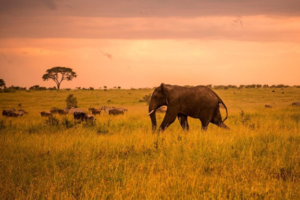
A Tanzania wildlife safari is more than a journey — it is an encounter with the raw, unfiltered pulse of the natural world. Nowhere else on Earth can you witness a million animals in motion across an open plain, watch a lioness teach her cubs to hunt at golden hour, or sit in silence as a herd of elephants moves like a slow river through ancient baobab woodland.
Tanzania’s national parks and reserves represent one of humanity’s greatest conservation achievements — vast wild landscapes preserved against the pressures of a growing world, where the ancient drama of predator and prey continues to unfold as it has for millennia. Every visitor who travels responsibly and supports ethical operators becomes part of that conservation story.
Whether you choose the Serengeti’s iconic horizons, the crater floor of Ngorongoro, the remote wilderness of Ruaha, or the river safaris of Nyerere, Tanzania will leave an indelible mark on your soul. It is, without question, one of the great journeys of a lifetime — and once experienced, it is never truly left behind.
Plan your safari with a TATO-certified operator and contribute to Tanzania’s extraordinary conservation legacy. The wildlife of Tanzania is a global treasure — let’s ensure it endures for generations to come.